A pain-free old age by grooming your skin
When you see aged skin, you see folded skin.
In fact, the folds are responsible for the most disturbing aspects of elderly life such as: chronic pain, loss of mobility, circulatory problems, loss of sensitivity, ugliness, ...
The good news is that the folds can be unfolded.
All these predicaments can be removed by grooming the skin.
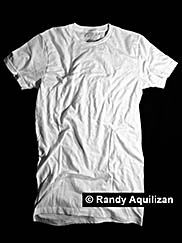
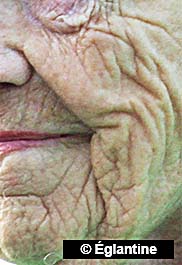
Since humans don't groom, the folds in their skin continuously deepen, and their lives gradually become more and more miserable and painful.
We call this phenomenon; aging.
When you reach old age, pain is almost always present.
The folds in your skin become so numerous and deep that they clutch, grip, constrict, and crush anything beneath them, making any movement difficult and painful.
On this page
Grooming can remove your pain and disabilities
Pain is in the skin
Take a few minutes to watch the video "Pain is in the skin".
It's for everyone, but it's especially relevant for older adults.
Pain is in the skin - Video

You may conclude that it's too late to start something you should have done all your life.
But, reducing, and possibly eliminating, the pain that originates in your most painful areas on your body can restore your mobility, and change your outlook on life.
Folds in your skin are responsible for your chronic aches and pains
You have a rational explanation for each of your chronic pains.
You've consulted specialists in different fields, and you may even have a name for your specific condition.
Well, all that is wrong, and you can verify it in a few seconds.
Simply press your nail where the pain originates, and you'll find the pain right there, in your skin.
Re-evaluate how you perceive your problem, as well as your attitude toward it.
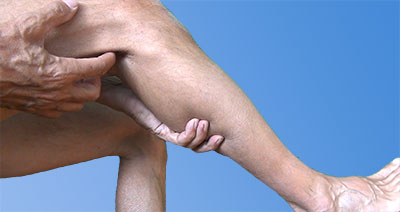
You may think that your condition is so bad that grooming it would take forever.
In reality, a little grooming makes a big difference.
Your skin is so badly folded in some areas that even a small amount of relief can make a huge difference in the pain you feel.
Your skin is strangling your articulations
Just take a look at any articulation on your body, and you'll see an abundance of folds.
You've grown so accustomed to some of them, that you ignore them.
But, these folds are responsible for the pain you feel, because the skin is caught in the mechanism of the joint.
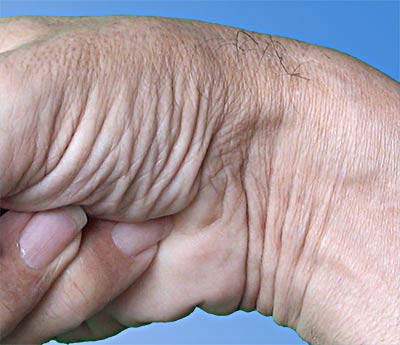
- In the deep grooves.
The skin is so thoroughly entangled into your articulations, that it strangles and paralyzes them, making every movement more painful with each passing year.
The pain can worsen when the articulation is at its maximum extension, or at a specific point in its elongation.
Moreover, the folds bury themselves so deeply that they crush the nerves and blood vessels beneath them, restricting their efficiency and flow.
As the folds tighten their grip on your articulations, some skin is pressed into their moving parts.
So, when you move and extend your limbs, the skin is pinched, ground and crushed by the mechanical action of the bones and cartilage.
Arthritis and rheumatism

|
Cure your arthritis without medication |
"Arthritis" and "rheumatism" are simply names given to the cutaneous pain that is caused by skin folding into the mechanism of each of your body's joints.
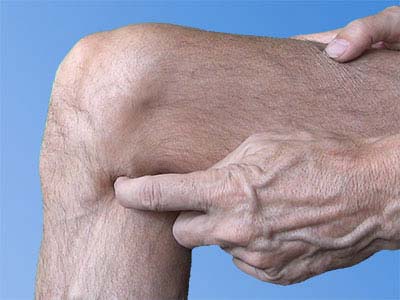
By applying pressure to the folds, you compress their underlying structure and free yourself from the pain.
Rehabilitate your disabilities
Some aches and pains have a debilitating effect; they prevent you from doing activities you used to do.
Grooming those places, using pressure grooming techniques, can get you moving again.
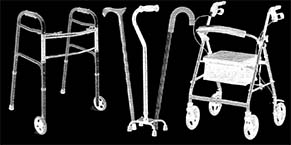
Your condition will only get worse, if you don't take control of the situation.
Start by precisely locating the points where the pain comes from (mark them with a pen if needed).
Then, press your nail directly into your pain for a few seconds.
Repeat this operation several times a day.
Over the following days and weeks, the pain should disappear completely.
Once you understand that your pain simply comes from your skin and that you can tame it, your anxiety level will decrease and your confidence will increase.
Aging and nervous disorders
Source: Wikipedia
The huge folds on the body of elderly people don't only bend their skin.
The nerves and blood vessels that pass through them get folded along with the skin.
The worst damage occurs where the folds cut deep into the skin.
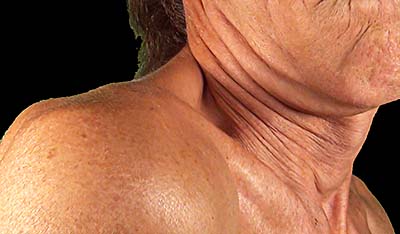
Grooming the areas where the nerves are blocked can restore the sensibility and responsiveness of the affected regions.
For more information:
-How folds in your skin affect your nervous system
-Grooming your skin to restore sensitivity
Restoring your looks
Removing the wrinkles for aesthetic reasons
Aged skin has generally been carelessly left untouched and unloved for several years.
When you're over fifty, it's too late to rejuvenate your skin completely using pressure grooming techniques.
But, your nails can do an excellent job on your most unsightly and damaged areas.
The appearance of aging skin can be greatly improved using superficial and pressure grooming techniques.
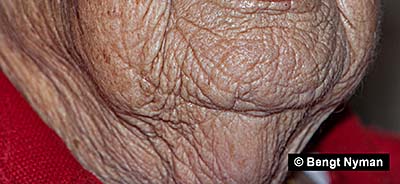
- Because it never has been touched.
The skin is not only folded, it is often covered with a thick layer of hardened, dead cells.
This coat of cells is similar to the varnish applied to wood, and it's just as hard and resistant.
Free yourself
The prevalence of physical aches and disabilities is proof that science has failed in its attempts to understand them.
This results in unnecessary surgeries on the back, hips, knees, ... which leave patients with their ailments.
Grooming answers the question "Why am I in pain?"; but it also works miracles to relieve it.
It eliminates the pain.
So, take action!
Only you can find the exact spots where you need to groom.
With effort and time, you'll be back to normal.